Long before a bird is released or a student encounters a raptor for the first time, our impact begins with focused, often unseen effort. Across our Avian Medical Clinic and The Center for Birds of Prey’s education programs, volunteer staff turn that effort into outcomes. We are extraordinarily proud to celebrate the contributions of all our volunteer staff, beginning with a focus on two “shining examples” of these amazing individuals.
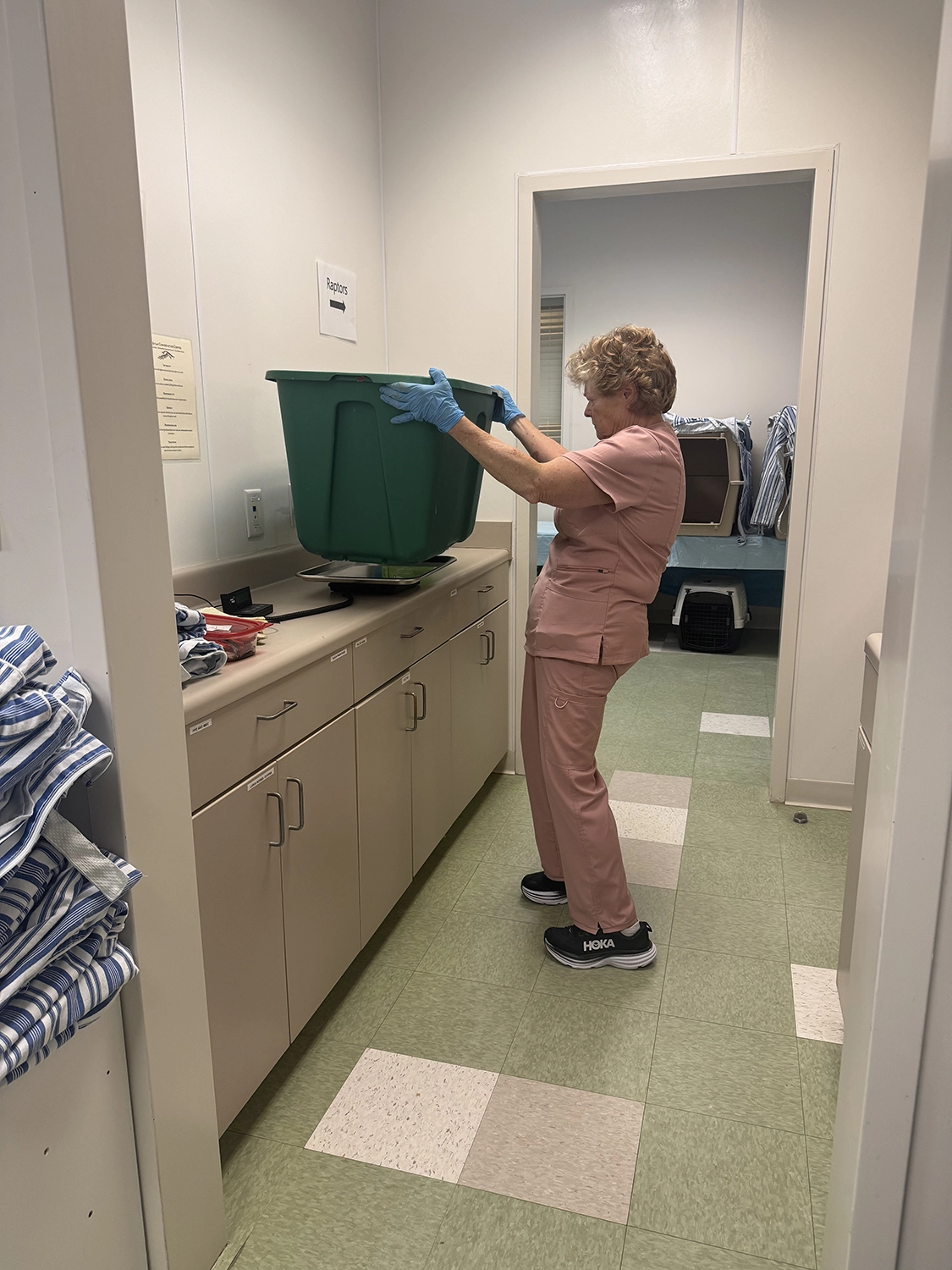
Roberta Stevens has dedicated seven years to the work of our Avian Medical Clinic. She supports precise medical care by documenting weights, leftovers, and observations, assisting with treatments, and maintaining the clinical environment. Every detail contributes to success, even a full camouflage ensemble at 9 a.m. to anonymously feed the owl chicks currently in our nursery.
Her work is defined by both high stakes and gratifying rewards. She recalls a red-tailed hawk treated for bumblefoot, an infection of the bottom surface of the foot, which remained in the clinic for nine months. “We never gave up on him. It was a huge moment when we were able to release him. A lot of people might have given up, but we didn’t.” That persistence reflects the reality of clinical care, where consistent attention can lead to life-saving outcomes.
These experiences have shaped her outlook. “I have much greater appreciation for raptors and shorebirds and their value to our environment and what they teach us about our community,” she reflects. “I’ve enjoyed every minute of my seven years. I couldn’t imagine not doing this.”
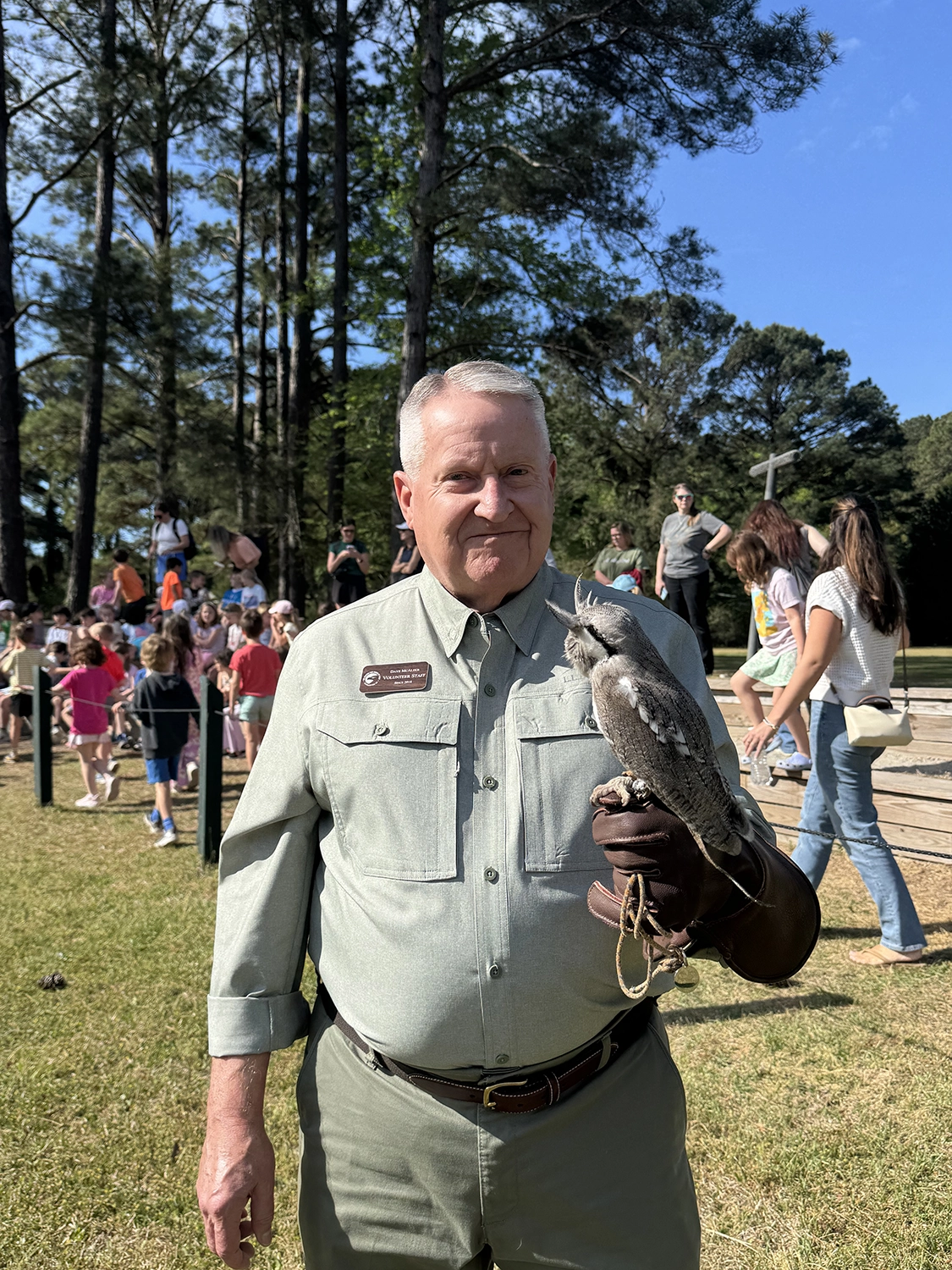
In The Center for Birds of Prey’s education and husbandry department, Dave McAleer brings his own unique perspective. A retired naval officer who flew the S-3 Viking and logged over 2,500 flight hours, he spent his life captivated by flight. “Even with all of the flight experience,” he notes, “watching birds fly, they’ve figured it out a lot better than we can. This is my opportunity to be around aviators that really know how to do it best.”
Working with the people he encounters during our education programs, Dave is able to convey this fundamental understanding in deeper conversation. “Everything to do with aviation, the physics of an airplane is all suited within raptors,” he explains. “You can see the lightbulb moment. They’re going to walk away and talk about it or come back and want to know more.”
Like the Avian Medical Clinic, The Center for Birds of Prey’s educational efforts depend on consistent work behind the scenes. “The people here are coming because they care,” Dave says. “The time and dedication, it shows.” Across both programs, volunteer staff are essential. Whether in birds returning to the wild or ensuring visitors leave with a deeper understanding, that impact continues to shape the work of the Center every day.